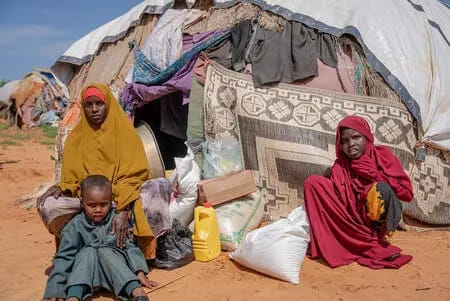
Somalia is in the grip of a deepening humanitarian emergency, with around 2.4 million people in urgent need of life-saving aid, according to the United Nations.
Prolonged drought, ongoing conflicts, and recurring disease outbreaks have left communities struggling to survive, while cuts in international funding are making it harder to reach those most in need.
George Conway, the United Nations Resident and Humanitarian Coordinator for Somalia, highlighted the severity of the situation.
“The humanitarian community in Somalia stands at a critical crossroads as unprecedented funding reductions have significantly constrained the collective capacity to deliver essential and life-saving assistance,” he said.
“Millions of people who have relied on humanitarian aid for decades are now losing their only source of support. In large parts of the country, humanitarian presence has diminished at a time when needs remain high, increasing the risk of loss of lives.”
The crisis is driven by multiple factors. Drought has left water sources dry and grazing lands degraded, forcing many families to abandon their homes. Livelihoods have been destroyed, food shortages are spreading, and displacement is on the rise.
The UN projects that 4.8 million people will need humanitarian aid in 2026—a drop of 20 per cent from last year, not because conditions have improved, but due to stricter rules defining who qualifies for assistance.
Experts stress that a lasting solution requires more than immediate aid. Humanitarian relief must be coordinated with development programs and peace-building efforts to address the root causes of the crisis.
To respond to the growing needs, Somalia’s government, the UN, and humanitarian partners have launched the 2026 Humanitarian Needs and Response Plan (HNRP), requesting US$852 million (Sh109.9 billion) to support vulnerable populations.
Under this plan, 1.6 million of the most at-risk people in 21 high-risk districts will receive targeted assistance. Mohamud Moallim, Commissioner of the Somalia Disaster Management Agency, emphasized the urgency.
“This plan is launched at a critical moment, as Somalia faces a severe and escalating drought following consecutive failed rainy seasons,” he said.
“Water sources are depleted, rangelands are degraded, livelihoods have been eroded, and millions of people are being pushed into acute food insecurity and displacement. Combined with ongoing conflict and recurrent climate shocks, the scale of this crisis demands an immediate, coordinated, and life-saving response.”
Without swift action and adequate funding, millions of Somali families risk facing even greater hardship, with hunger, disease, and displacement threatening entire communities.